Let’s be honest: the AI writing tool space is a mess. Every week there’s a new contender claiming to write better than a human, generate SEO content on autopilot, or save you ten hours a week. Most of them are variations of the same underlying model dressed up with a different interface.
I’ve spent the last few months actually using these tools — not just running demo prompts, but writing real content with them, testing their outputs against search results, and seeing which ones hold up when the brief gets specific. Here’s what I found.
What Makes an AI Writing Tool Worth Using?
Before getting into the list, it’s worth setting the bar. A good AI writing tool in 2026 needs to do more than generate fluent text. It needs to:
- Follow a brief without constant correction
- Write in a consistent voice across multiple pieces
- Produce content that doesn’t read like it was written by a committee
- Handle SEO basics without requiring a separate workflow
- Integrate with the tools you’re already using
With that in mind, here are the tools that actually cleared the bar.
1. Claude (Anthropic)
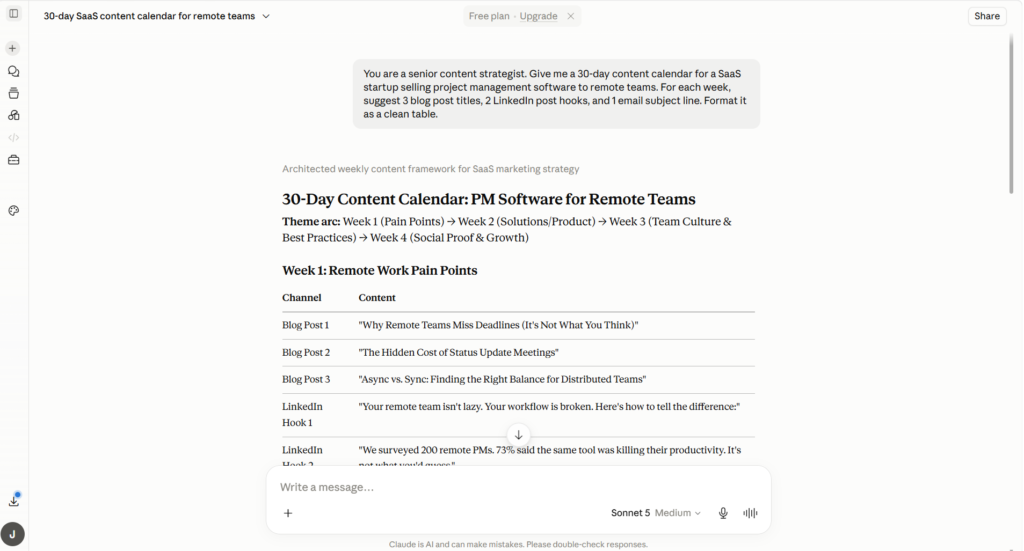
Claude has quietly become the tool serious writers reach for first. Where other models tend toward corporate-sounding output, Claude produces prose that sounds like a person actually thought about what they were writing. Long-form content holds together better — arguments build, paragraphs connect, tone stays consistent.
The standout feature is instruction-following. Tell it to write in a specific voice, stick to a word count, or avoid certain phrases, and it actually does it. Not perfectly every time, but reliably enough to cut editing time significantly.
Best for: Long-form blog content, thought leadership pieces, anything where voice matters.
Pricing: Free tier available; Pro at $20/month.
2. Writesonic
Writesonic has carved out a solid position by combining AI writing with real-time web access through its Chatsonic feature. Most AI writing tools are frozen at a knowledge cutoff — Writesonic can pull current information, which matters when covering fast-moving topics where accuracy is on the line.
The core article writer produces solid long-form drafts, and the template library covers most marketing use cases. It integrates natively with Surfer SEO so you can optimize without switching tabs. For the price point, the versatility is hard to beat.
Best for: Content creators and marketers who need a versatile tool at a reasonable price.
Pricing: Free tier available; Individual plan from $16/month.
3. Surfer SEO + AI
Surfer isn’t primarily an AI writing tool — it’s an SEO content optimizer that added AI writing on top. And that’s actually what makes it interesting. The content editor analyzes top-ranking pages for your target keyword and tells you exactly which terms to include, how long your article should be, and what structure tends to win.
The AI writing component is decent but not exceptional. The real value is the data layer underneath it. If you’re serious about ranking, using Surfer’s guidelines with a better writing tool (like Claude) gives you the best of both worlds.
Best for: SEO-focused content where ranking is the primary goal.
Pricing: Essential plan from $99/month.
4. Copy.ai
Copy.ai has pivoted hard toward workflow automation and it’s a better product for it. The go-to-market workflows let you build multi-step content pipelines — brief in, social posts and blog article out, automatically routed to the right people. For agencies or content teams managing multiple clients, this kind of orchestration saves real time.
The writing quality is solid for short-form content. Don’t expect it to produce a 2,000-word feature article worth publishing as-is, but for social copy, email subjects, and ad variants it moves fast.
Best for: Agencies and teams that need content workflow automation.
Pricing: Starter plan from $49/month.
5. Notion AI
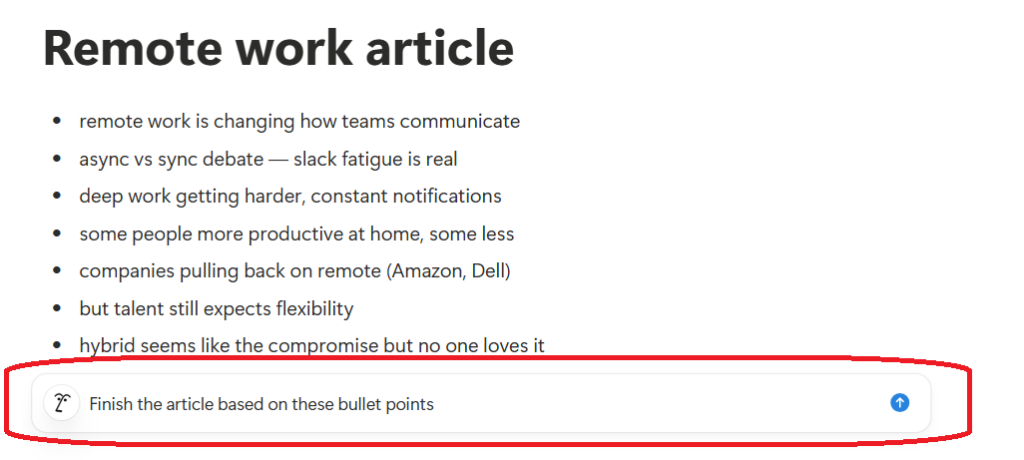
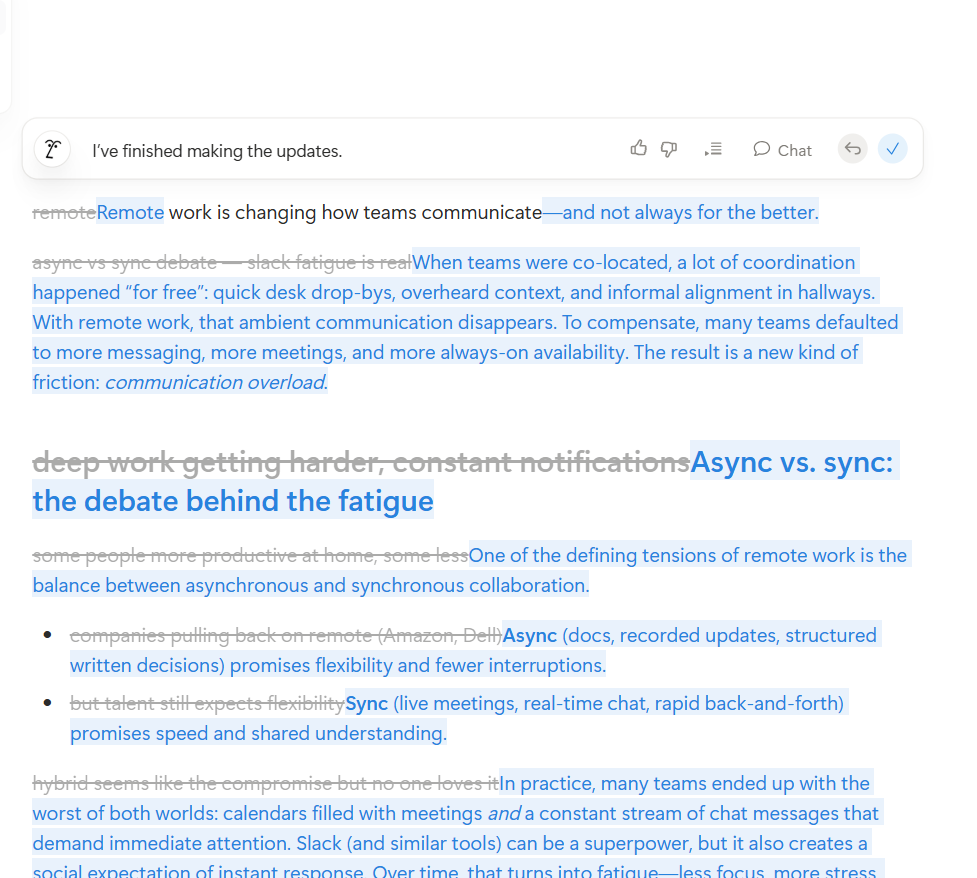
If you already live in Notion, the AI integration is worth having. It’s not the most powerful writing tool on this list, but the friction of staying in your existing workspace is real. Being able to draft, summarize, and edit without switching tabs adds up over a week.
It’s best used as a writing assistant rather than a primary generator — helping you get unstuck, clean up drafts, and turn rough notes into readable text. The price is right if you’re already paying for Notion.
Best for: Notion users who want AI without adding another subscription.
Pricing: AI add-on at $10/month per member.
The Bottom Line
There’s no single best AI writing tool — the right one depends entirely on what you’re trying to produce and how you work. If voice and long-form quality matter most, Claude is the clear choice. If you’re running a content operation at scale, Writesonic or Copy.ai’s workflow features are worth the higher price point. If SEO rankings are the primary metric, build your workflow around Surfer’s data layer.
The tools that will still be on this list in two years are the ones that keep getting better at the hard parts: following specific instructions, maintaining consistent voice, and producing content a reader actually wants to finish. That bar is higher than it sounds.